/journal · 2026-09-12 · 6 min read
Planning hospitality SEO around Oxford's visitor calendar
Oxford's visitor trade follows a calendar set by the seasons, the University and a handful of big events. Search demand follows the same calendar, a few weeks earlier.
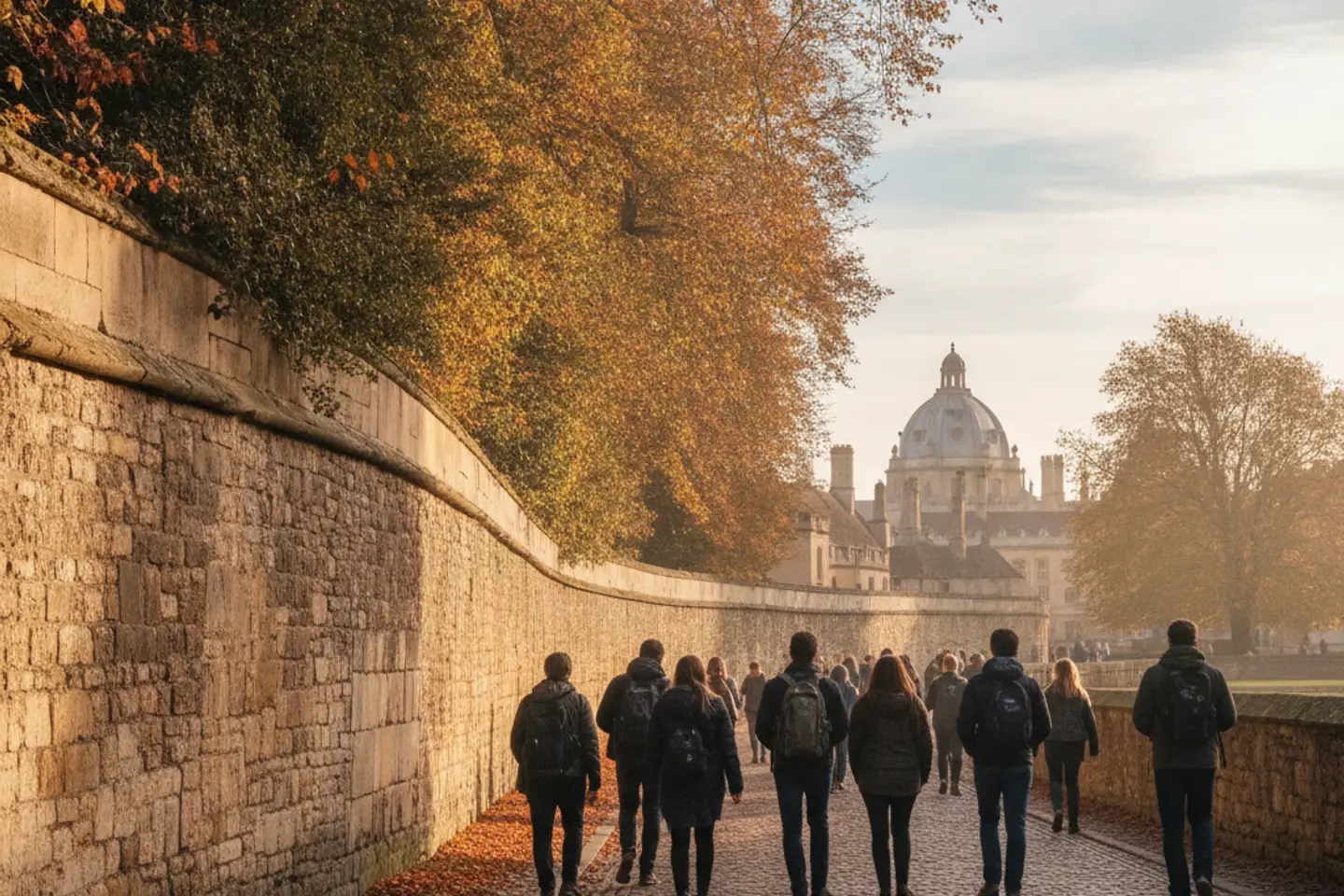
Oxford is one of the most visited cities in Britain. Visitors come for the colleges, museums and libraries, for the film and literary connections, for graduations and open days, and as a base for the Cotswolds and Blenheim Palace. Hotels, restaurants, guides, shops and attractions all depend on that flow.
Search demand from visitors is predictable once you know what drives it. This article sets out the main patterns and how to plan around them.
Search happens before the visit
Most visitors research before they arrive. Someone planning a summer weekend in Oxford may start searching in spring. Families booking for graduation look months ahead. Day-trippers and international groups may search the week before, then search again on their phone on the day.
That gives two kinds of search to plan for:
- Planning searches: "hotels in Oxford city centre", "Oxford walking tour", "best restaurants in Oxford", "things to do in Oxford in December".
- On-the-day searches: "coffee near me", "lunch near the Ashmolean", "pub near Christ Church Meadow", usually on a phone and usually through maps.
Different businesses need different emphasis. A hotel lives on planning searches. A cafe on Broad Street lives on on-the-day searches. Many businesses need both.
Oxford's calendar
The patterns below are broad, and every business should check its own Search Console and booking data, but they hold for most of the city.
Spring
Visitor numbers rise from Easter. Planning searches for summer trips begin. University open days, held in early summer, bring families looking for accommodation and somewhere to eat. If you want summer bookings, spring is when your pages need to be ready.
Summer
The busiest period for tourism, with large numbers of international groups, language school students and day visitors. On-the-day searches peak. Map visibility, accurate opening hours and fast mobile pages matter most now. Content published in summer for summer demand is usually too late.
Graduation and term
Degree ceremonies are held at various points across the year, and each brings families who need accommodation and restaurants for a specific day. The start of Michaelmas term in October brings students and parents. These are short, sharp peaks, and businesses near the city centre that publish practical, helpful pages ahead of them can do well.
Autumn and winter
Visitor numbers fall after summer but pick up for Christmas markets, seasonal events, festive dining and short winter breaks. Searches for Christmas parties and festive menus start earlier than many restaurants expect, often in September and October.
What to do, and when
Three months ahead: content and pages
If you need a page for a season or event, such as a Christmas menu, a summer tour or graduation dining, publish it well before demand starts. Google needs time to find and rank it, and planners are searching early. Update and republish recurring seasonal pages each year rather than creating new ones, so they keep their history.
Four to six weeks ahead: profiles and listings
Update your Google Business Profile with seasonal photos, special hours and posts. Check your listings on booking, review and visitor sites are accurate. If your opening hours change for events or holidays, set special hours so you do not lose customers who find you closed.
During the peak: speed and accuracy
On-the-day searchers are on phones with patchy signal in narrow streets. A slow website or a menu as a large PDF loses them. Check your site on a phone over mobile data before the season starts.
After the peak: review
Look at what worked. Which searches brought visitors? Which pages were viewed? This data shapes next year's plan.
The city centre problem
Many central Oxford businesses share a small area with dozens of competitors. Map results for "restaurant" or "cafe" in the centre are crowded. Specific categories and specific content help: a restaurant that serves a particular cuisine, or a cafe with study space, should make that clear in its category, attributes and website.
Landmarks help too. Visitors often search relative to places they know: the Bodleian Library, the Radcliffe Camera, the Ashmolean, Christ Church, the Covered Market. A page that honestly explains how close you are to the places visitors are heading can rank for those searches.
Guides, tours and attractions
Walking tours, punting, museums and themed tours compete with large booking platforms that dominate "things to do" searches. Being listed on those platforms often makes sense. Your own website should still be the best source of information about your tour: times, prices, meeting point, accessibility, languages and what visitors will see. That page is what people find when they search for you by name after hearing about you.
Measuring seasonal SEO
Compare each season with the same season last year, not with the previous month. A fall in October is normal; a fall compared with last October is worth investigating. Search Console lets you compare date ranges, and most booking systems report the source of bookings.
The takeaway: publish and update seasonal pages months before the season, keep the same URLs year after year, and judge results against the same period last year rather than last month.
A planning calendar for seasonal content
| Season or event | When people start searching | When your page should be live and updated |
|---|---|---|
| Summer visits | Early spring | February to March |
| Christmas markets, festive breaks and dining | Late summer to early autumn | August to September |
| Graduation and university events | Weeks to months ahead | Well before the dates are published |
| Spring weekends and Easter | Early in the year | January to February |
| Weddings and events | A year or more ahead | All year, refreshed annually |
The pattern is the same across all of them: the search starts well before the trip, and Google needs time to find and trust an updated page. A page published the week before the season starts is usually too late.
Three examples
A city centre hotel. It keeps a single, permanent "Christmas in Oxford" page that it updates each autumn with festive menus, opening times and events. Because the URL never changes, the page keeps the links and rankings it earned in previous years, and each update builds on the last.
A walking tour operator. Its busiest months are in summer, but its most useful content is a set of planning guides, such as how long to spend in Oxford and how to combine a visit with the Cotswolds, that people read in spring. The guides link to booking pages, and visibility in AI search matters too, as visitors increasingly ask AI tools to plan itineraries.
A pub with rooms in West Oxfordshire. It sees summer demand from walkers and Cotswold visitors, and winter demand from people wanting a short break. It writes separate pages for each, rather than one generic "stay with us" page. Our Witney and West Oxfordshire page covers this kind of visitor economy.
Checklist before each season
- Update dates, prices and opening times on seasonal pages.
- Check that the pages are indexed in Search Console.
- Add special hours to your Google Business Profile.
- Refresh photos so they match the season.
- Link to the seasonal page from your homepage and main navigation.
- Note last year's figures for comparison.
Summary
Oxford's visitor economy is seasonal, and search demand runs ahead of it. Publish seasonal pages early, update profiles before each peak, keep the mobile experience fast, and review what happened each season. Most of this is planning rather than spending, and it rewards businesses that start before their competitors.