/areas
Didcot and Harwell
Harwell Campus is one of the UK's main science and innovation sites, home to national facilities and a large cluster of space, energy and health tech companies.
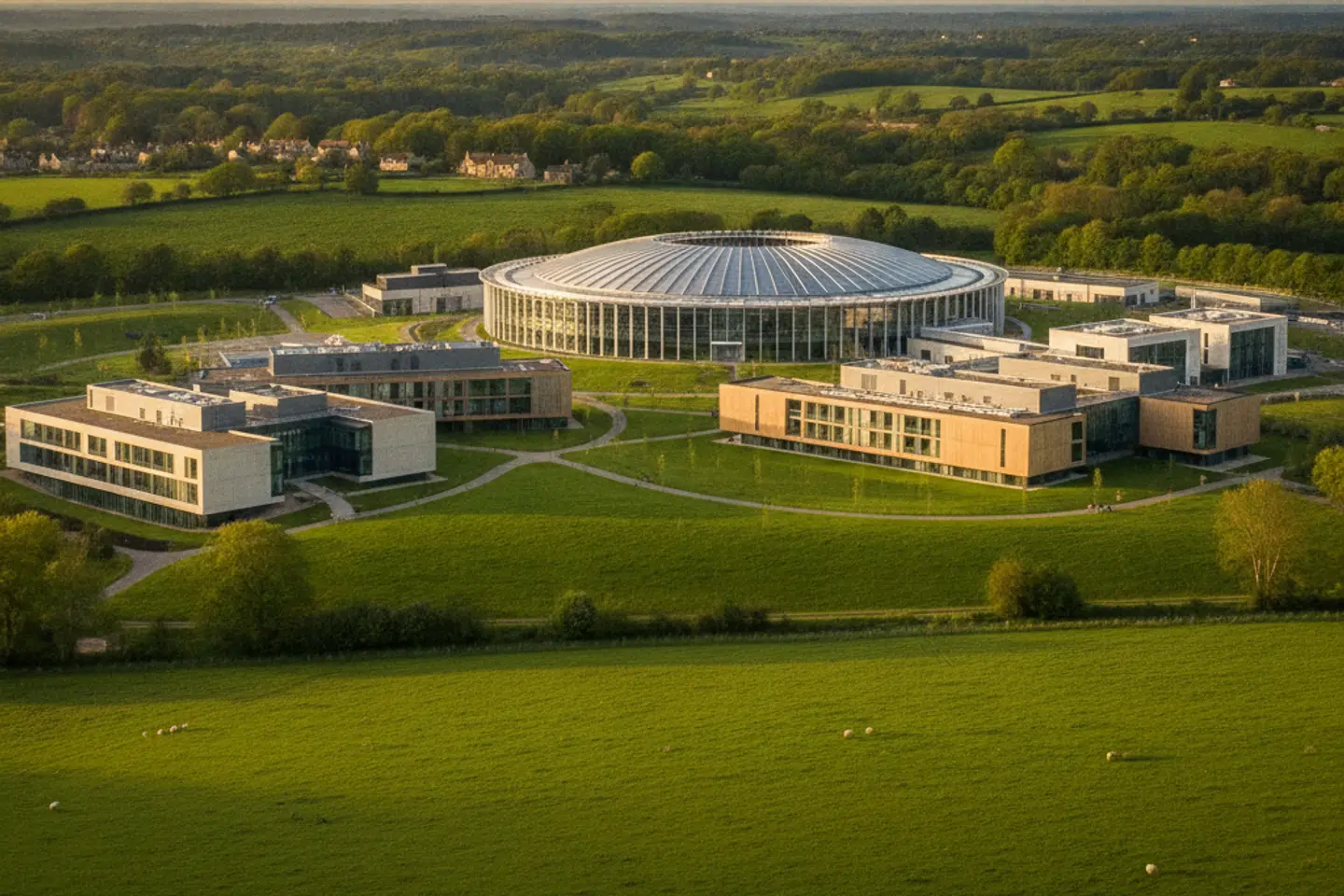
Didcot and Harwell Campus
Didcot is a growing town in South Oxfordshire, with an OX11 postcode, best known as a railway junction and for its new housing. Great Western Park, a large development on the town's western edge planned for around 3,300 homes, is one of several that have expanded the town considerably. A few miles to the south, Harwell Campus is one of the UK's most important science sites. It is home to Diamond Light Source, the UK's national synchrotron, and the STFC Rutherford Appleton Laboratory, which runs facilities including the ISIS neutron and muon source and the Central Laser Facility. In 2013 the European Space Agency opened ECSAT at Harwell, its first base in the UK, and the campus has since become a centre for space businesses.
Milton Park, about three miles west of Didcot, adds a further cluster of life sciences, technology and logistics companies. Few towns of Didcot's size sit so close to so much research.
SEO for companies on Harwell Campus
Harwell businesses range from tiny spin-outs to established firms in space, energy, life sciences, quantum and advanced materials. Almost none of them are searched for locally. Their buyers are engineers, scientists, agencies and procurement teams across the world, and their searches are precise:
- Technology names: "hyperspectral imaging satellite data", "radiation-hardened electronics".
- Methods and services: "X-ray crystallography services", "materials characterisation lab UK".
- Problems: "how to measure residual stress in welds".
For these companies, SEO is about making deep expertise visible. That means pages for each application and method, honest comparisons with alternative technologies, named scientists and published work, and specifications that can be read without downloading a PDF.
| Common problem on science campus websites | What to do instead |
|---|---|
| Homepage written for investors | Pages for each application, written for buyers |
| Key data in PDFs | Indexable specification and application pages, with PDFs as downloads |
| One "Technology" page for everything | Separate method, product and use-case pages |
| No people shown | Team pages with roles, expertise and publications |
| Careers page with a single email address | Individual role pages with structured job data |
Proximity to the big facilities
Many companies on and around the campus work with the national facilities, as users, suppliers or partners. Where that is true and can be stated publicly, it is worth saying so clearly. It explains the company's expertise, gives readers context and can lead to links from partners and facilities. We never suggest claiming a relationship that does not exist; it is the specific, verifiable detail that builds trust.
Recruitment is an SEO problem here. Harwell and Milton Park companies compete for the same scarce scientists and engineers. Careers pages that rank for role and location searches, and that answer candidates' practical questions about commuting and the campus, are often the best investment a growing company can make. See our post on science park careers pages.
Didcot town businesses
Didcot's own economy is shaped by its growth. New housing areas bring families who need everything from GPs and dentists to nurseries, trades, gyms, takeaways and estate agents. Many of these residents are new to the area and rely on search to find local services. For Didcot businesses that means:
- Making sure Google Business Profile is complete, with the right categories and service areas, including the newer neighbourhoods you serve.
- Building service pages that mention the places you work and the jobs you do there, not just "Didcot".
- Gathering reviews, which new residents lean on heavily when they have no personal recommendations yet.
- Watching map rankings from different parts of the town. Distance matters, and the town has spread west.
Nearby villages, from Harwell village to Blewbury and beyond, are often served by Didcot businesses. Mention them where you genuinely work there.
Space and deep tech sales
Space and deep tech companies often sell into long procurement processes with government agencies, primes and research institutions. Search plays a role early, when engineers research technologies and shortlist suppliers. Good technical content, a clear explanation of capabilities and evidence of track record put a company on those shortlists. Our SEO for science and B2B page sets out how we plan this kind of work, and AI search visibility matters too, as researchers increasingly ask AI tools to summarise technologies and suppliers.
How we approach Didcot and Harwell
We treat Didcot town businesses and Harwell Campus companies as separate kinds of work. Town businesses start with local SEO. Campus companies start with buyer interviews, a technical review and a content plan built around technical searches. In both cases we set a baseline first and report on it monthly.